
"What is protein?" "Why is Protein Important?" "What foods are high in protein?" Have questions about protein? Great! I'm a Registered Dietitian and I have the answers!
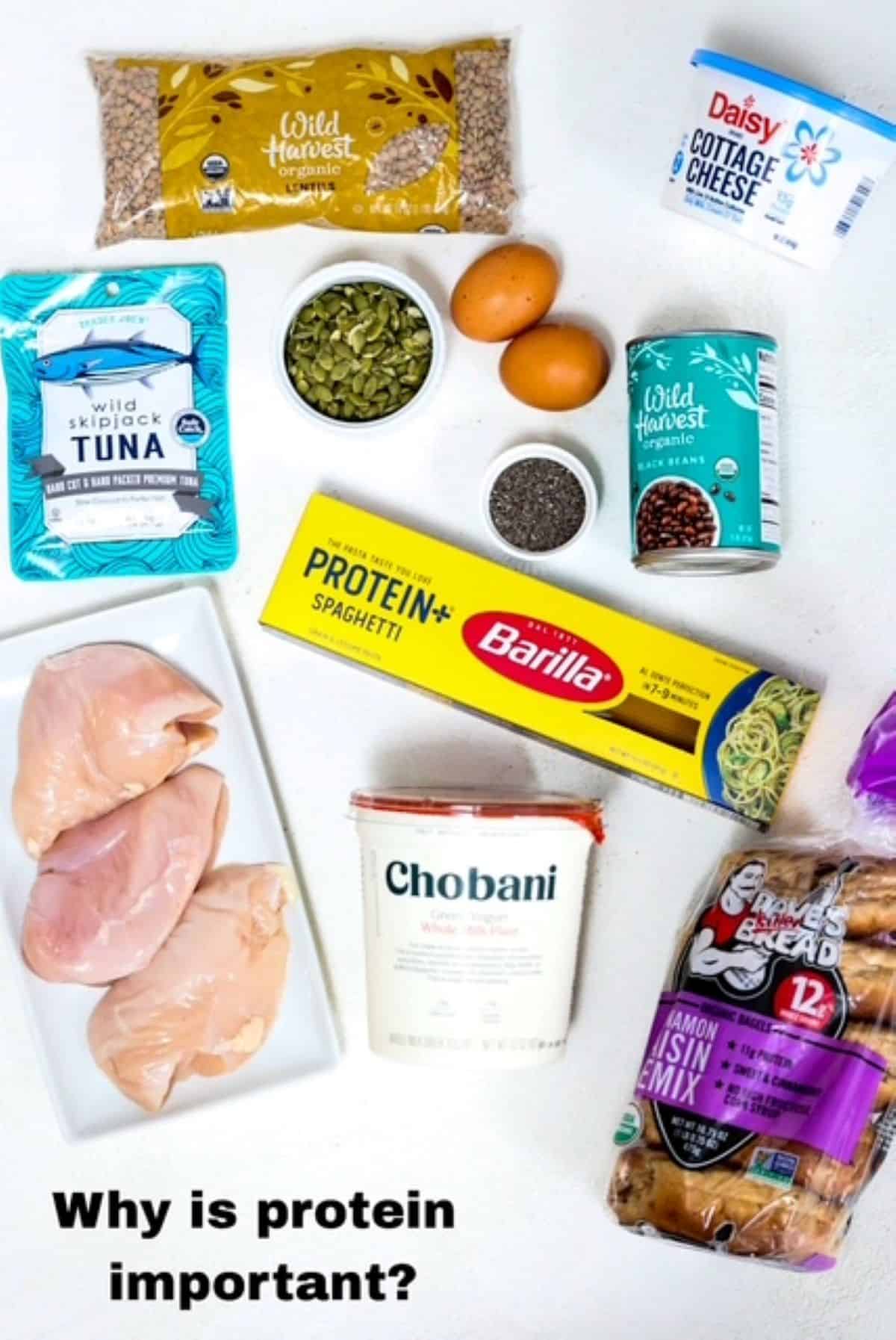
With all the hype around protein, I figured it might be helpful for you to get simple answers to your most pressing questions from a reliable source - me!
Jump to:
What is Protein?
In the simplest terms, proteins are large, complex structures made up of amino acids, which are essential for human health. Along with carbohydrates and fat, protein in our diets serves as a source of energy, providing 4 Calories per gram (g).
Why is Protein Important?
With all the hype around protein lately, I'm sure you've found yourself wondering about the importance of protein in the body. Like, what's the big deal anyway?
Believe it or not, proteins are involved in so much more than building muscle.
In fact, proteins play a role in everything from structural support (ligament and bone growth, in addition to muscle growth) and hormones, to cellular transport and immune health.
And, similar to including foods with fiber and fat in meals, eating protein can help you feel full longer.
Dietitian Tip
Making simple substitutions in recipes is one of the easiest ways to increase protein intake.
For instance, using bone broth instead of chicken broth can increase protein by 6 grams per cup, while cooking with protein pasta (I like Barilla Protein Plus - not sponsored😉) instead of white pasta can increase the amount by 3 grams per cup.
Protein Rich Foods
Here's a list of 26 commonly eaten foods that are great sources of protein, with the approximate amounts each one contains. If I spelled out every cut of meat, type of milk, yogurt, cheese, every nut and seed, and every vegetable that contains any amount of protein, the list would be way too long, lol. Please note that I use g for grams and oz for ounce to make the chart easier to read.
|
Cooked Chicken |
6-9 g per oz |
Edamame |
18g per cup |
|
Turkey |
8 g per oz |
Tofu |
4-15g per 100g |
|
Seafood (i.e. salmon, shrimp, cod, tuna) |
6-8 g per oz |
Tempeh |
18g per 3oz |
|
Cooked Beef |
5-8 g per oz |
Chia Seeds |
6 g per 2 tbsp |
|
Cooked Pork |
6-8 g per oz |
Hemp Hearts |
10g per 3 tbsp |
|
Milk (Cow) |
8 g per 8oz (one cup) |
Oats |
5 g per half cup |
|
Soy Milk |
7g per 8 oz (one cup) |
Flax Meal |
3g per 2 tbsp |
|
Yogurt |
6 g per three-quarter cup |
Bone Broth |
8-10g per cup |
|
Plain Greek Yogurt |
15g per three-quarter cup |
Whole Grain Bread & Bagels |
3-11g per serving |
|
Kefir |
7-10g per cup |
Peanut Butter |
7-8 g per 2 tablespoons |
|
Skyr (Icelandic yogurt) |
12-15g per half cup |
Almond Butter |
7g per 2 tbsp |
|
Cottage Cheese |
13g per half cup |
Eggs |
5-7 g per egg |
|
Beans |
7-8g per half cup |
Cooked Peas |
8g per cup |
Plant vs Animal Protein
Plant protein = protein from plant sources (examples: soy products, beans, whole grains, lentils, nuts, and seeds). Plant proteins vary in protein quality.
Animal protein = protein from animal sources (examples: eggs, beef, chicken, pork, dairy milk and milk products). Fish is also a type of animal protein. Animal sources of protein may be more beneficial for building lean mass (muscle), especially in younger adults.
In the end, meeting your protein needs from a variety of sources helps to ensure you're receiving a variety of other nutrients as well.
Easy Ways to Increase Protein Intake
- Smoothies Super convenient! Thankfully there are so many ways to increase protein in smoothies without protein powder. Examples include tofu, milk, yogurt, chia seeds, hemp hearts, or peanut butter.
- Milk Choice Cow's milk and soy milk contain more protein than almond milk or oat milk.
- Whole grains Whole grain products don't just contain more fiber, but they also contain more protein than the refined versions (pasta and bread for examples).
- Greek Yogurt Contains more protein than regular yogurt. Enjoy Greek yogurt with granola or use plain Greek yogurt to replace some or all of the mayonnaise or sour cream in recipes, like chicken salad.
- Protein Powder An easy and convenient way to add protein to your diet. Protein powders are often added to smoothies and smoothie bowls for a protein boost.
Helpful Tips
- Nutrition Facts Labels Read the labels on products to know exactly how much protein it contains per serving. First look at the serving size, then at the number of grams of protein.
- Non-Perishable Food Keep a variety of protein-rich non-perishable food items in your pantry. Examples: lentils, chia seeds, hemp hearts, oats, white whole wheat flour, and canned tuna.
- Frozen Foods Keep your freezer stocked with a variety of high-protein frozen food items, like frozen chicken breasts, salmon, and ground turkey to help you maintain a high protein diet without getting bored of eating the same things every day.
- Protein Powder While protein powder is an easy and convenient source of protein, it is possible to meet your protein needs without it.
Questions You May Have
The amount of protein you need depends on your age, weight, health status, health goals, as well as level and type of physical activity.
Generally speaking, protein needs range from about 1-2 grams of protein per kilogram (kg) of body weight per day for healthy adults.
As for kids, their protein needs (grams of protein per kg of body weight) depend on age and stage of development.
As you'll see in this example below, if you are intentional with your meals and snacks, it is possible to meet your protein needs from food.
Breakfast: One piece of an egg casserole (14g) one slice of whole wheat banana bread (4g), and fresh fruit.
Snack: Apple slices and celery with 2 tablespoons of almond butter (7g).
Lunch: Chicken Salad (23g) on a Dave's Killer Bread bagel (11g) with a side salad.
Snack: High protein Greek yogurt Parfait (28g) or Skyr yogurt with granola and fruit (15-20g)
Dinner: Air Fryer Salmon (25g) with Orzo and Broccoli (6g) OR bean and rice casserole (13g) with tortilla chips (2g), and a cup of milk (8g).
Optional Dessert: Chocolate Chia pudding (9g)
Long term inadequate intake of protein can lead to poor growth, anemia, physical weakness, edema, vascular dysfunction, and a weakened immune system.
Yes, it is possible to eat too much protein. This is why it's important to include a variety of foods with each meal.






louette coulson says
thank you for the protein information and samples of protein I forgot some of them and I just had a blood test that showed my protein is low so I really appreciate your articles, I learn something with everyone thank you so much!!
Kristi Ruth RD says
I'm so glad you found this information helpful!